Intro Freshwater Overview (12-18) 18/24
Intro Freshwater Overview (12-18) 18/24
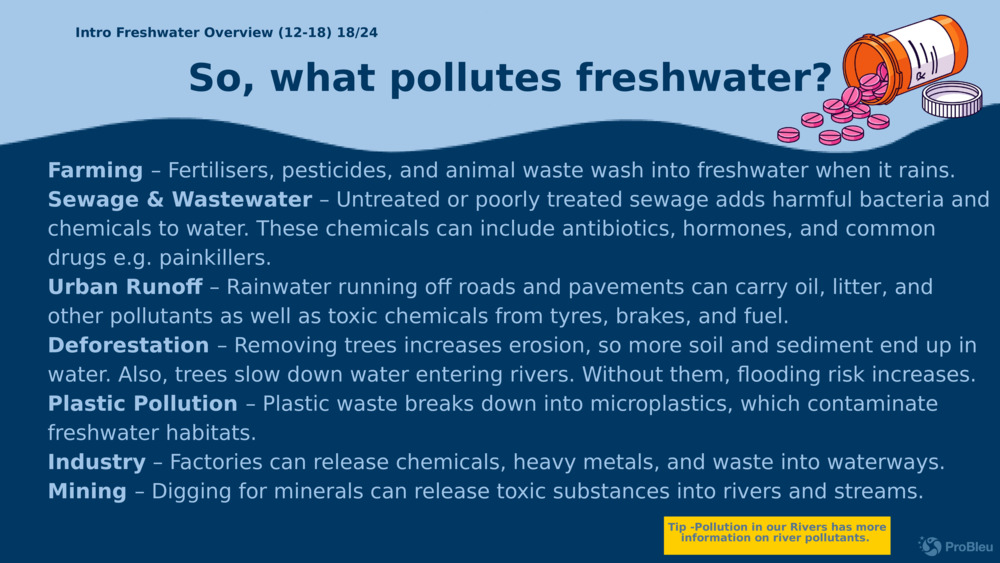
Farming – Fertilisers , pesticides, and animal waste wash into freshwater when it rains. Sewage & Wastewater – Untreated or poorly treated sewage adds harmful bacteria and chemicals to water. These chemicals can include antibiotics, hormones, and common drugs e.g. painkillers. Urban Runoff – Rainwater running off roads and pavements can carry oil, litter, and other pollutants as well as toxic chemicals from tyres , brakes, and fuel. Deforestation – Removing trees increases erosion, so more soil and sediment end up in water. Also, trees slow down water entering rivers. Without them, flooding risk increases. Plastic Pollution – Plastic waste breaks down into microplastics, which contaminate freshwater habitats. Industry – Factories can release chemicals, heavy metals, and waste into waterways. Mining – Digging for minerals can release toxic substances into rivers and streams. So, what pollutes freshwater? Intro Freshwater Overview (12-18) 18/24
Original Slide Deck: Freshwater Overview 12-18
Topics: Climate. Freshwater. Citizen Science. Plastic Pollution. Nutrient Pollution.
Suitable Ages: 12. 13. 14. 15. 16. 17. 18.
Keywords: Citizen Science. Climate. Climate Change. Contamination. Ecosystem. Education. Environment. Farming. Fertilisers. Freshwater. Freshwater. Freshwater Monitoring. Microplastics. Nutrients. Plastics. Plastics. Plastics. Plastics. Pollution. River Restoration. Rivers. Water. Water Cycle. Water Quality.
Uploaded By: earthwatch-admin
Number of bundles using this content: 1
Licensed under CC BY 4.0
This content has been used in the following resource bundles:
Citizen Science and Freshwater
The FreshWater Watch project allows students from across the globe to ...
View Bundle