Intro Freshwater Overview (12-18) 19/24
Intro Freshwater Overview (12-18) 19/24
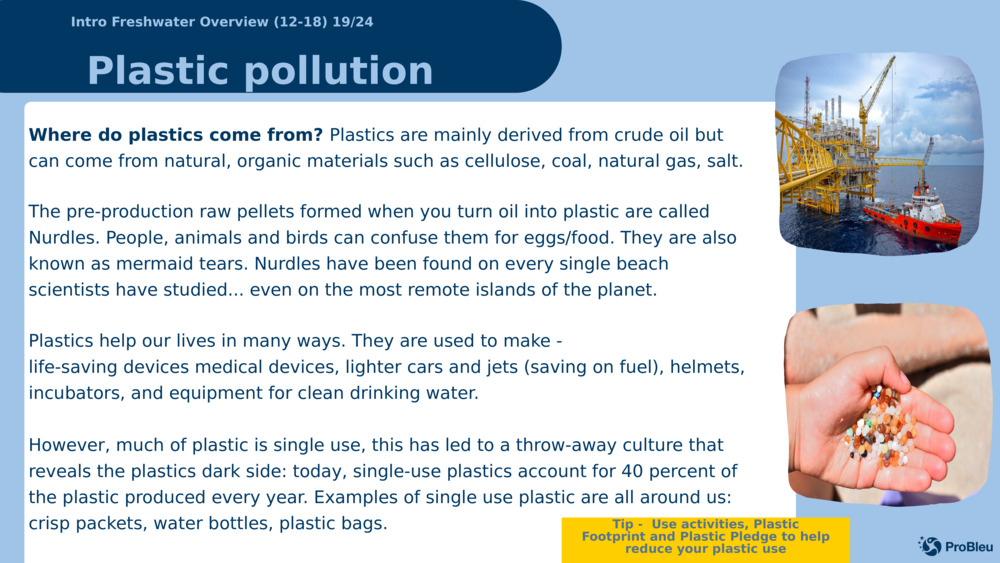
Plastic pollution Plastics help our lives in many ways. They are used to make - life-saving devices medical devices, lighter cars and jets (saving on fuel), helmets, incubators, and equipment for clean drinking water. However, much of plastic is single use, this has led to a throw-away culture that reveals the plastics dark side: today, single-use plastics account for 40 percent of the plastic produced every year. Examples of single use plastic are all around us: crisp packets, water bottles, plastic bags. The pre-production raw pellets formed when you turn oil into plastic are called Nurdles. People, animals and birds can confuse them for eggs/food. They are also known as mermaid tears. Nurdles have been found on every single beach scientists have studied... even on the most remote islands of the planet. Where do plastics come from? Plastics are mainly derived from crude oil but can come from natural, organic materials such as cellulose, coal, natural gas, salt. Intro Freshwater Overview (12-18) 19/24
Original Slide Deck: Freshwater Overview 12-18
Topics: Climate. Freshwater. Citizen Science. Plastic Pollution. Nutrient Pollution.
Suitable Ages: 12. 13. 14. 15. 16. 17. 18.
Keywords: Citizen Science. Climate. Climate Change. Contamination. Ecosystem. Education. Environment. Farming. Fertilisers. Freshwater. Freshwater. Freshwater Monitoring. Microplastics. Nutrients. Plastics. Plastics. Plastics. Plastics. Pollution. River Restoration. Rivers. Water. Water Cycle. Water Quality.
Uploaded By: earthwatch-admin
Number of bundles using this content: 1
Licensed under CC BY 4.0
This content has been used in the following resource bundles:
Citizen Science and Freshwater
The FreshWater Watch project allows students from across the globe to ...
View Bundle